About
Technology should make things easier for people
That simple idea has driven 15+ years of UX work across aerospace, insurance, broadcasting and enterprise software.
I got into UX because of a conversation with a professor.
I was studying Online Media at the University of Florida when I showed my professor a website I'd designed. She looked at it and started asking me questions I hadn't considered. Could someone actually use this? How would they find what they needed? She introduced me to the concept of user experience design, and something clicked.
To go deeper, I completed a Master's in Human-Computer Interaction Design at Indiana University, Bloomington. It was one of the best decisions I've made.
I'm drawn to difficult problems. The kind where you have to get in close, untangle what's actually happening, bring the right people into the room and build something carefully enough that you can test whether it's actually working. I've done that with aircraft maintainers in hangars in Atlanta, with pilots at a private aviation terminal in Vancouver, with broadcast TV planners at Turner and with brokers and agents navigating complex insurance products at Aflac.
I’ve also built parts of the systems that let research happen well. At Honeywell I owned the research function and its Dovetail repository, and I trained other researchers alongside my lead researcher. At Honeywell and Aflac I set up the privacy and compliance policies research runs under.
My first lesson in leading without authority came years ago, when I was a technical product owner. Another product owner and I each led the people on our own projects, with no management title and none of the authority that comes with one. A new UX director I was helping onboard watched me lead engineers, QA and designers on my program over his first months. Eventually he brought me into UX as a manager reporting to him. I hadn't asked for the role. He created it because I was already doing the work.
That is still how I think about leading. Authority helps but it isn't where leadership starts. It starts with being the person others trust to steady things, and with what you do once they trust you.
"She was the glue of our UX group — the person you sought out. I have not worked with a leader who excels in this quite like she does."
Ernest Son, then a Sr. Advanced UX Designer at HoneywellWhat I do is stay in my team's corner. I look for untapped potential and gently push people toward it. I set my team up to take credit for wins and help them work through the things that didn't go as planned. Some of my favorite professional relationships are with people who used to report to me, and watching them grow in their careers is one of the most satisfying parts of this work. I also launched and ran Honeywell's UX internship program for four summers, and five of the ten interns were hired.
At Honeywell, product managers were handing Rob Jones, a designer I worked with, requirements for his screens with no explanation of why. I pushed him to understand the why, and his designs were better for it. After he moved to a new job, he told me he was already arguing for changes in a list of 30 requirements, because he knew what happens when you don't. That's what I'm trying to do. Help people ask better questions, and trust what they find.
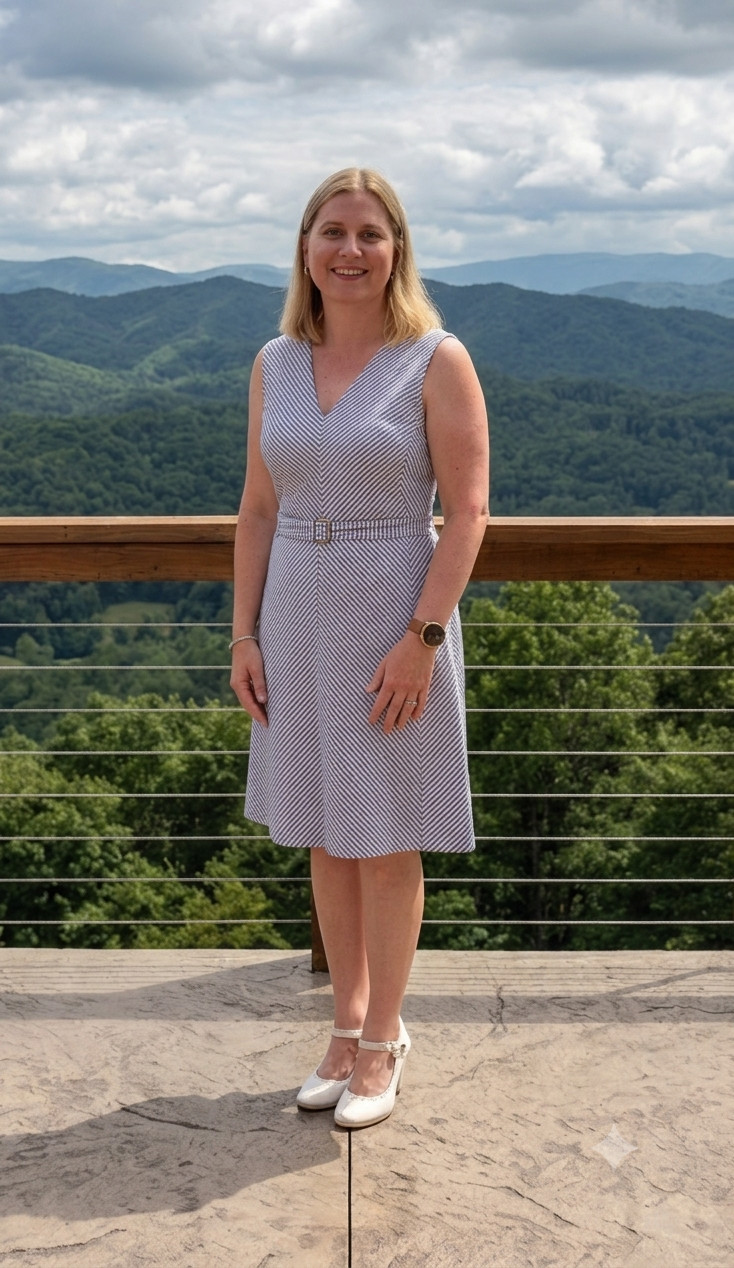
Most people who know me know about my dress collection: vintage and contemporary pieces spanning various eras. Fashion and home renovation are where I put my creative energy outside of work. I have a running list of ideas for our home that I'm slowly working through.
I'm also one of the founding leaders of IxDA Atlanta, which I've been part of since 2009. I'm currently Treasurer, a role I've held for five years, and I help curate our speaker series, The Changing Landscape of UX.